I Tried Dr. Brooke Goldner’s Goodbye Autoimmune Protocol: My Step-by-Step Guide
"No disease that can be treated with diet should be treated by any other means." — Maimonides
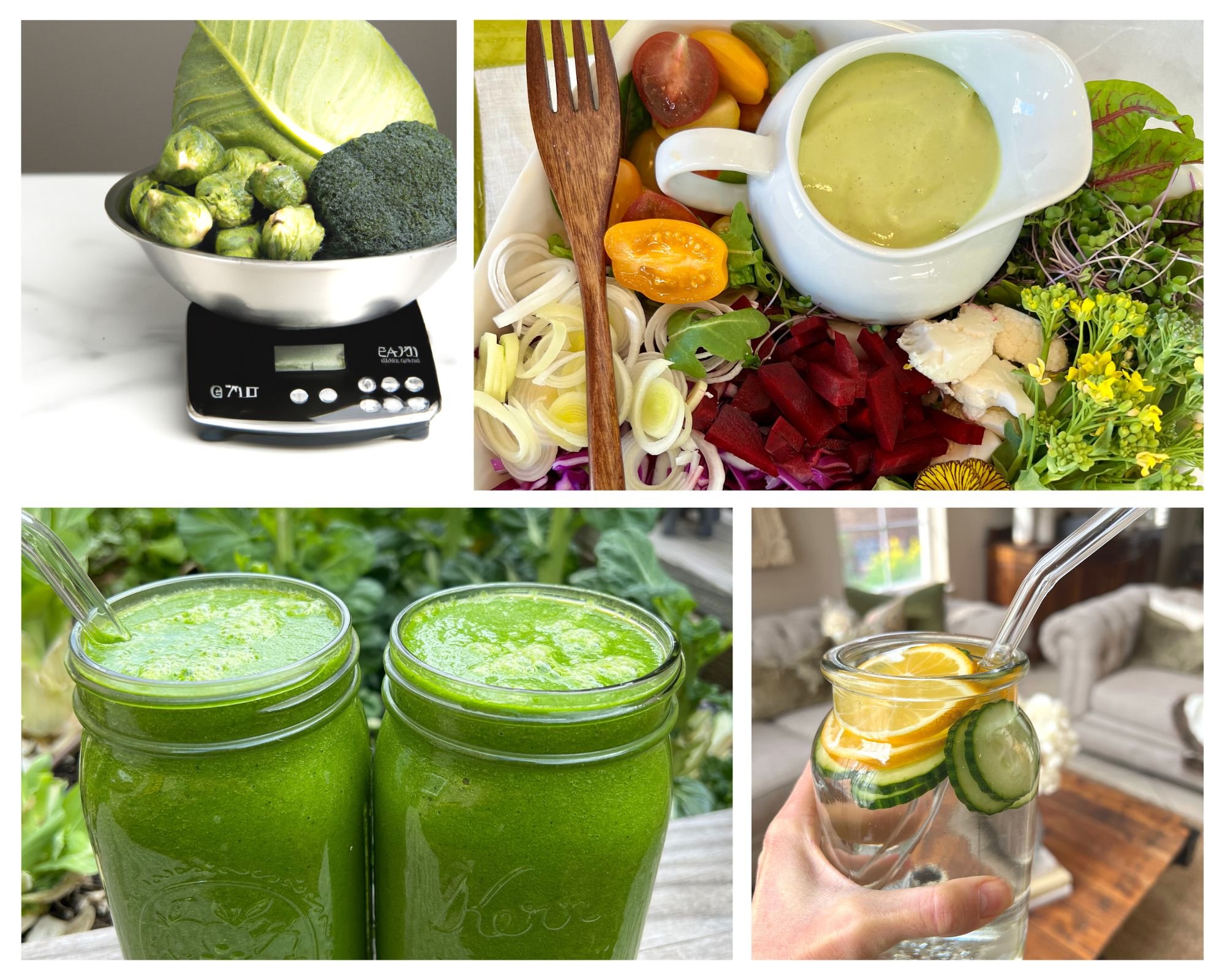
I vividly remember the day, almost 20 years ago, when I discovered the world of healing through food and lifestyle changes.
Someone close to me had been diagnosed with cancer, and I was devastated. I started researching nutrition, lifestyle and healing—and what I discovered changed the trajectory of my own life.
Until then, I had thought chronic disease was mostly genetics, aging or bad luck. I became fascinated by how profoundly our daily choices can influence health.
My Health Journey Before Dr. Brooke
By the time I found Dr. Goldner, I was already about five years into my own health journey. A breast lump had been the wake-up call that made me take a serious look at my health, and not long after that I found Chris Wark of Chris Beat Cancer. I became fascinated by his story and the many interviews he shared with people who had made major lifestyle changes while facing serious illness. That opened a whole new world for me and became a big part of what inspired me to change how I ate.
Even though I already ate pretty healthfully, that experience changed something in me. I decided overnight to eat completely plant-based. About three months later, I went fully raw and stayed that way for roughly three and a half years. After that, I transitioned to a high-raw diet for another year and a half. By the time Dr. Goldner entered my world, about five years had passed since that first wake-up call. You can read more about my health journey here.
For most of that time, I felt wonderful. So many things had improved. I felt happy, strong, healthy, and incredibly grateful for the changes I had experienced. By then, I was reading everything I could get my hands on about nutrition and health. I read, listened to interviews and summits, and eventually enrolled in school to become a health coach.
But after several years, I began noticing a couple of things that made me curious. My hair was shedding more than I liked, and my energy wasn’t quite as strong as it had been. I still felt very healthy overall, but I knew my body well enough to notice that something had shifted.
How I Found Dr. Brooke Goldner
Around that time, I was listening to the Food Revolution Summit, hosted by Ocean Robbins, and one speaker was Dr. Brooke Goldner. I loved her immediately! She was warm, joyful, encouraging, and so clearly devoted to helping people. Her story about reversing her Lupus was so inspiring. I bought her books that day, sent her videos to three people, and listened to everything I could find from her!
What Happened When I Tried It
I wasn’t sure her protocol would help me, since I already felt so healthy, but I was intrigued by the results she was seeing in thousands of patients, so I decided to follow her raw protocol exactly and see what would happen. I’m always up for an adventure in health!
Within about two weeks, I noticed that my hair had stopped shedding and my energy was coming back.
I can’t know for certain which part of the protocol made the difference, but I suspect the enormous increase in leafy greens and cruciferous vegetables, along with the much higher amount of omega-3s, may have played a role. I also began following Dr. Goldner’s iodine recommendations after years of eating very little salt, so that may have contributed as well. Whatever the reason, I was thrilled!
Who Is Dr. Brooke Goldner?
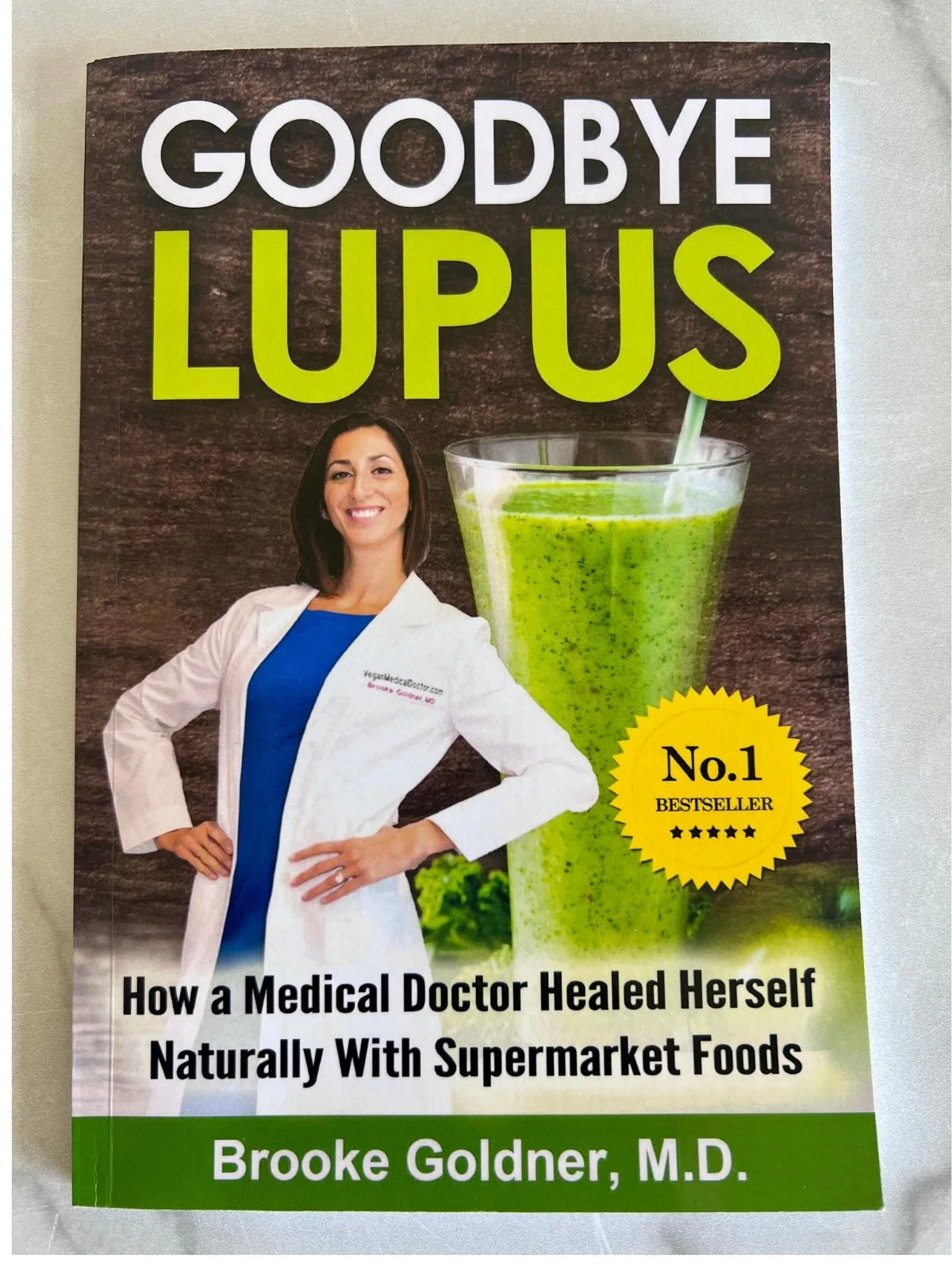
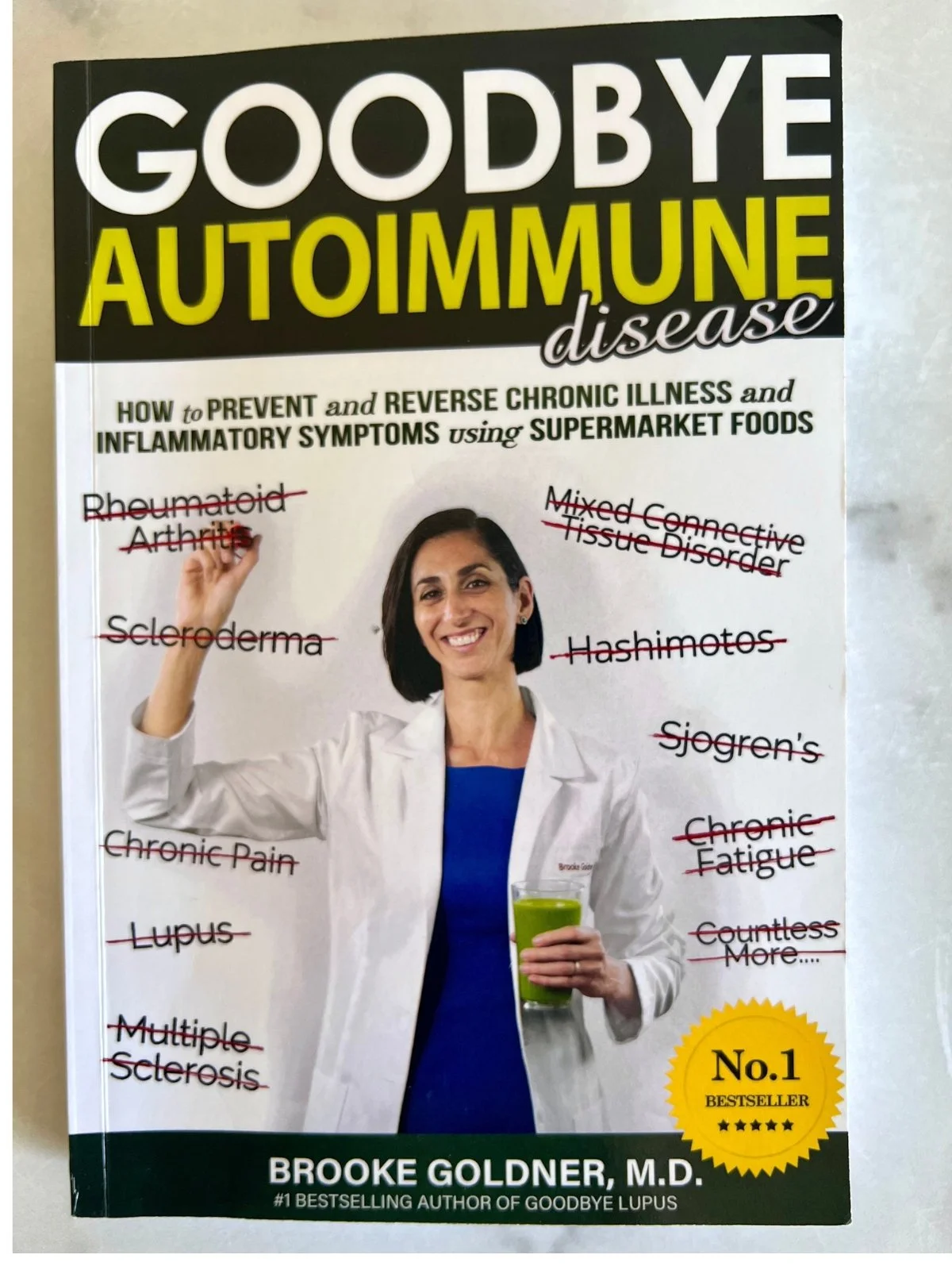
These are the two books I bought when I first discovered Dr. Brooke’s work. I’ve linked both in the resources section at the end of this article if you’d like to explore her approach further.
Dr. Brooke Goldner is a board-certified physician and the creator of the Hyper-Nourishment Protocol for Autoimmune Disease Reversal. She developed her approach after recovering from severe lupus, which she had lived with beginning at age 16. According to Dr. Goldner, she has remained lupus-free, with normal lab tests, since 2005. She has since devoted her career to teaching nutrition and working with people living with autoimmune and chronic inflammatory diseases.
You can read more about her story and work at Goodbye Lupus.
One thing I liked right away was how specific she was. She wasn't simply saying, "Eat more vegetables." She explained which foods she prioritized, how much to eat, how much water to drink, and how she used those foods in people actively trying to reverse inflammatory disease.
Research on her protocol has also been published.
A 2019 case series described two patients with lupus nephritis who experienced substantial improvements after adopting a customized raw, whole-food, plant-based diet emphasizing leafy greens and cruciferous vegetables, omega-3 fats and water. A 2024 peer-reviewed case series published in Frontiers in Nutrition described three women with lupus and Sjögren's syndrome who reported remission of symptoms after following Dr. Goldner's strict plant-based recovery protocol. These are small case series—not randomized controlled trials—and larger studies are still needed, but I find the results fascinating and worthy of further research.
Read the 2024 Frontiers in Nutrition study
When I decided to try the protocol myself, I went searching for exactly the kind of article you're reading now.
I wanted to hear from someone who had actually done it.
What did they eat? How did they get a pound of greens and cruciferous vegetables into a day? What did they do with all that flax and chia? What did the protocol actually look like in real life?
I found plenty of information, but the practical details were scattered. I wanted to find someone who had actually done it and would just tell me, ‘Here’s what I ate. Here’s what helped. Here’s what this looked like in a normal day.’
That’s what I wanted this guide to help with. After living this way in the real world—workdays, family gatherings, restaurants, travel, meal prep, and everything else—I eventually wrote a separate guide devoted entirely to [making the Goodbye Autoimmune Protocol work in real life].
The protocol sounds intense on paper. Once I understood what went in my blender, what went in my salad bowl, and what I needed to have in the house, it became surprisingly simple.
Dr. Goldner’s Protocols and Programs: What’s the Difference?
If you’re new to Dr. Goldner’s work, the terminology can be confusing. Hyper-Nourishing, Goodbye Lupus, Goodbye Autoimmune, and Rapid Recovery are related, but they don’t all mean the same thing.
Dr. Goldner’s Hyper-Nourishing Protocol focuses on the nutritional foundation she teaches: large amounts of dark leafy greens and cruciferous vegetables, omega-3-rich flax or chia, and plenty of water. Hyper-Nourishment can also be used less intensively by adding these foods to an otherwise healthy diet.
The Goodbye Lupus Protocol is the intensive nutrition and hydration approach Dr. Goldner developed from the way she changed her own diet during her recovery. This is the fully raw, more intensive version of Hyper-Nourishing that this article focuses on.
As Dr. Goldner worked with more people, her approach expanded beyond food and hydration. She came to emphasize the importance of sleep, stress management, self-care, mindset, habits, and emotional well-being as part of the healing process. The Goodbye Autoimmune Protocol (GAIP) incorporates those broader lifestyle pieces alongside the same core nutritional foundation.
The food and hydration piece is very similar, but GAIP goes beyond that into sleep, stress, habits, mindset, and the rest of daily life.
And then there’s Rapid Recovery, which is where a lot of the terminology gets mixed up. Rapid Recovery is not another name for following the protocol on your own. It is Dr. Goldner’s paid, coached program, offered in group and one-on-one formats, with intensive guidance and support while participants follow the protocol.
In other words, you can follow GAIP without being enrolled in Rapid Recovery.
If you’re looking for a gentler way to begin rather than following the full intensive protocol, you may want to start with my guide to Dr. Brooke Goldner’s Hyper-Nourishing Protocol instead.
The Goodbye Autoimmune Protocol at a Glance
A quick note: I’m a certified health coach, not a medical doctor. This article shares my personal experience and Dr. Brooke Goldner’s teachings for educational purposes only. If you have a medical condition, take medication, or are making significant dietary or supplement changes, please work with a qualified healthcare professional.
Dr. Goldner's protocol centers on a few surprisingly simple components:
At least 16 ounces (1 pound) of raw dark leafy greens and cruciferous vegetables each day
½ cup ground flax or chia seeds OR 3 tablespoons cold-pressed flaxseed oil or chia oil (start slowly and work up to the ½ cup so your body has time to adjust to all that fiber, or go with the oil)
96–128 ounces of water daily, unless your physician recommends otherwise
Unlimited avocados and raw vegetables freely throughout the day—just make sure the required 1 pound of dark leafy greens/cruciferous needs are met first
Fruit kept to no more than about 25% of total food intake during recovery
A raw, whole-food, plant-based diet during the recovery phase
Vitamin B12 and vitamin D: Dr. Goldner recommends monitoring these nutrients and supplementing when needed. If possible, have your levels checked so you can make informed dosage decisions with your healthcare provider.
Iodine: Dr. Goldner recommends 150 mcg per day for a healthy, functioning thyroid, or 300 mcg per day for those with low thyroid function. She also recommends taking iodine about one hour before cruciferous vegetables or two hours afterward so the cruciferous vegetables don’t interfere with iodine absorption.
Salt: Dr. Goldner recommends about ¾–1 teaspoon of salt per day on the recovery protocol. She has repeatedly emphasized the importance of getting adequate sodium when drinking the large volume of water required by the protocol and has discussed seeing people run into problems when they increase their water substantially without getting enough salt. If you use iodized salt, it can also provide your daily iodine, and you don’t need the extra supplement. If you have high blood pressure, kidney or heart disease, or have been told to restrict sodium or fluids, follow your healthcare provider’s recommendations instead.
That’s really the foundation of it. Most of what you need is sitting in the produce section of a regular grocery store.
1. Make Dark Leafy Greens and Cruciferous Vegetables the Foundation
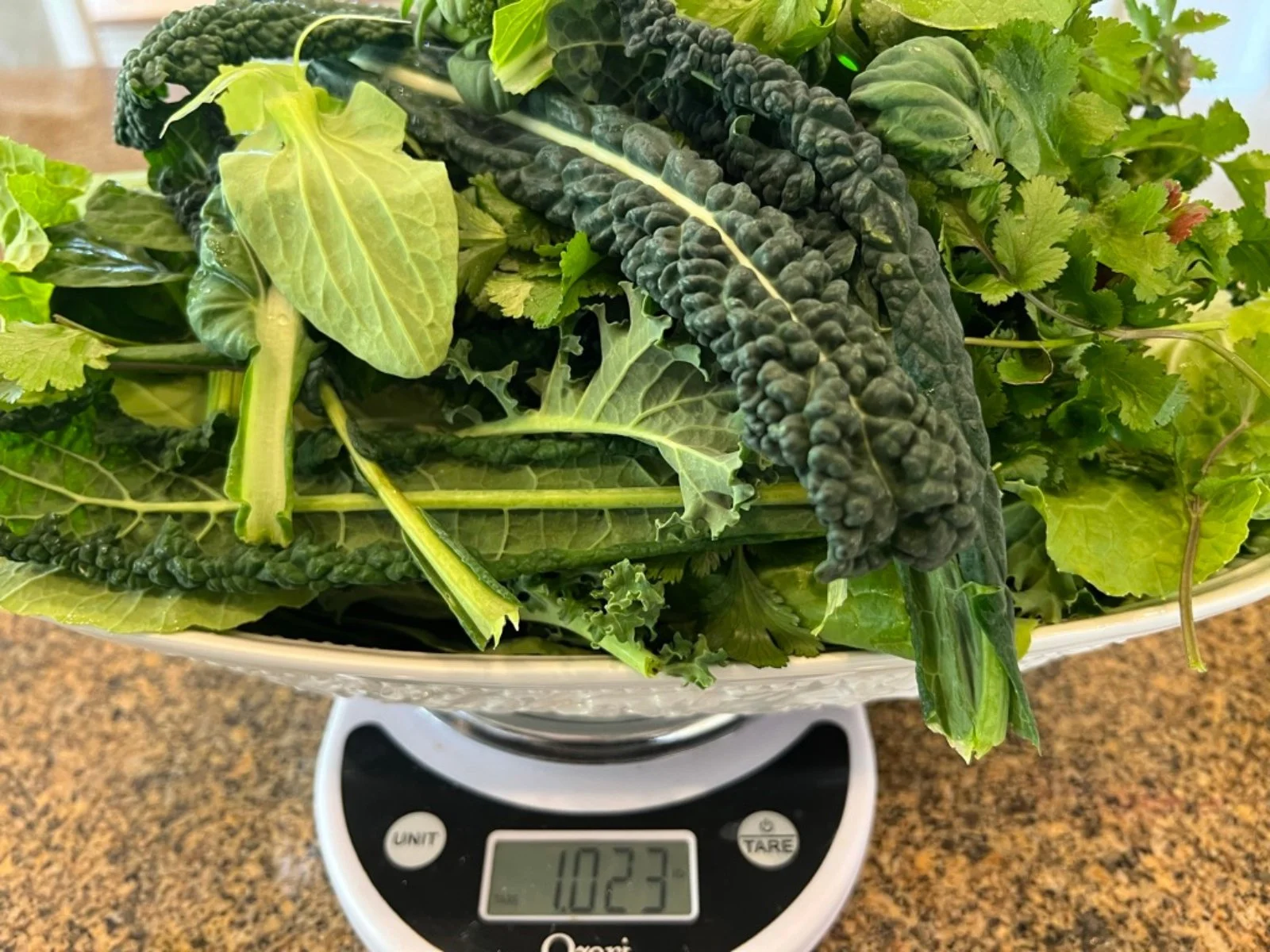
The minimum target during the protocol is one pound—16 ounces—of dark leafy greens and cruciferous vegetables each day.
Think:
kale
spinach
Swiss chard
collard greens
arugula
broccoli
cauliflower
cabbage
bok choy
Brussels sprouts
I already loved cruciferous vegetables, so this part of the protocol was easy for me to get excited about. This entire family of vegetables contains compounds called glucosinolates that have fascinated cancer researchers for decades. When we chop, chew, and digest them, glucosinolates can be converted into protective compounds that researchers have studied for their potential role in cancer prevention.
Johns Hopkins researchers helped put these vegetables on the scientific map when their work identified sulforaphane—found in broccoli and other cruciferous vegetables—and uncovered ways it may help protect cells from cancer-causing damage. Broccoli sprouts turned out to be an especially concentrated source, but the larger story is one of the reasons I love eating a variety of cruciferous vegetables.
A question Dr. Goldner gets often is whether broccoli sprouts can replace some or all of the one-pound greens-and-cruciferous requirement since they’re so concentrated in beneficial compounds. Her answer is essentially: she hasn’t tested that substitution, so she can’t recommend it. Her advice is to stick with the full one-pound minimum and enjoy broccoli sprouts as an extra nutritional boost—not as a replacement.
If you'd like to geek out with me about why these vegetables are so fascinating, read my article on cruciferous vegetables and sulforaphane.
One practical lesson I learned very quickly: use a kitchen scale at first. (Not an affiliate link, just one I have used for years) I had no idea what a pound of greens actually looked like until I started weighing them.
A pound of vegetables can look dramatically different depending on what you're weighing. A pound of spinach is an enormous mountain of leaves. Broccoli, cauliflower, and cabbage are heavier, making the goal easier to reach—and often less expensive.
I frequently use about half leafy greens and half heavier cruciferous vegetables.
2. Get Your Daily Omega-3s
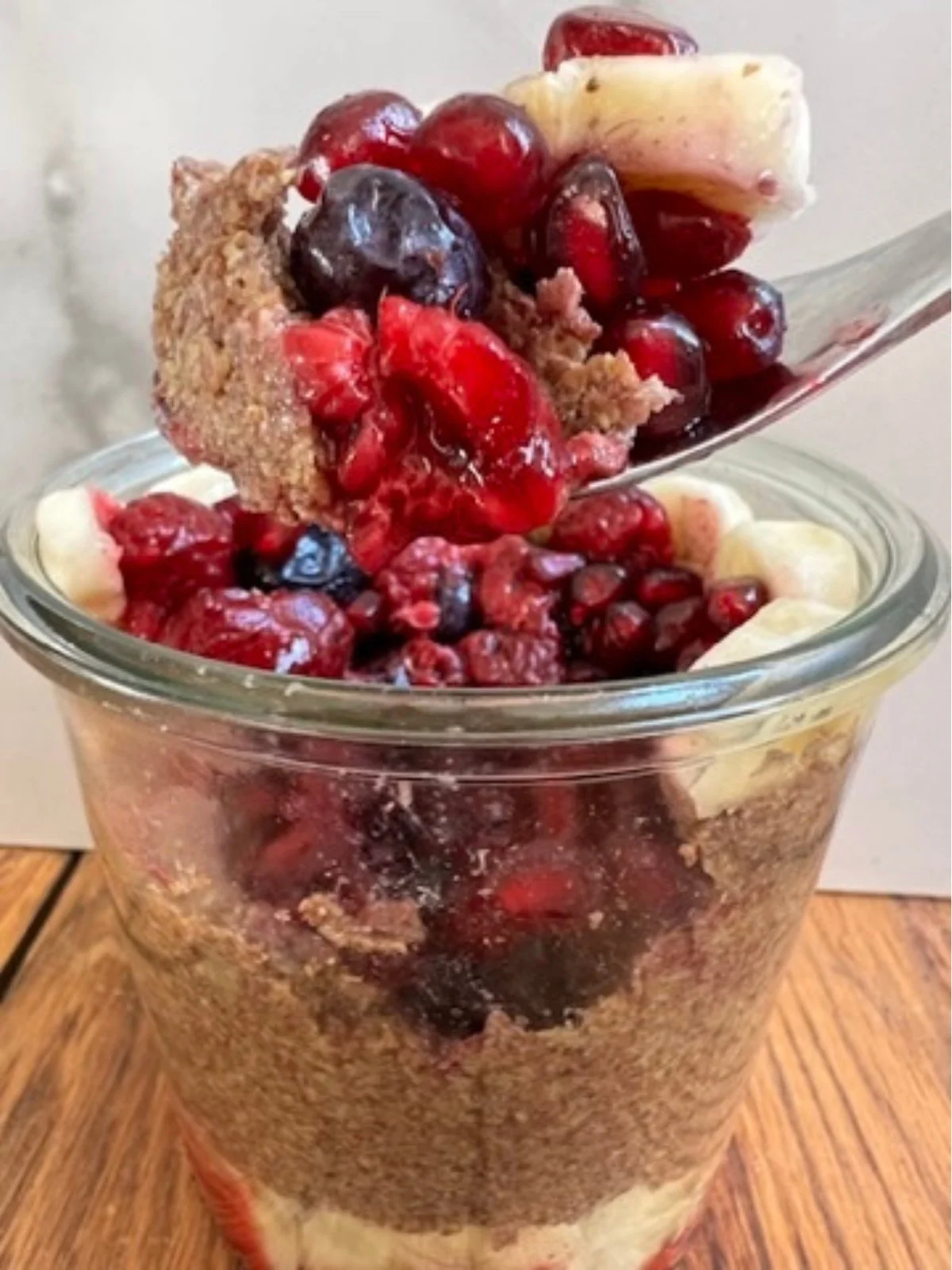
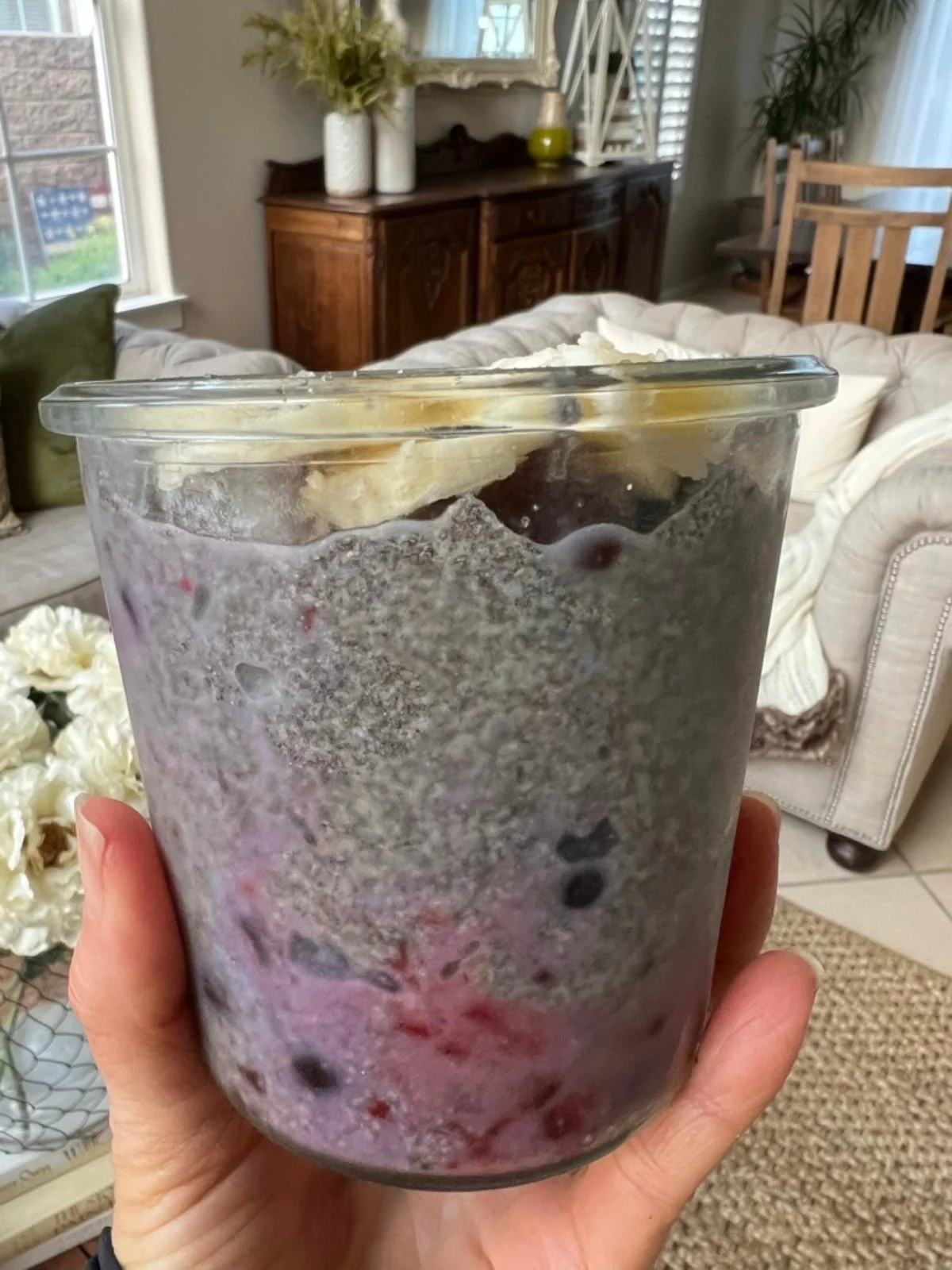
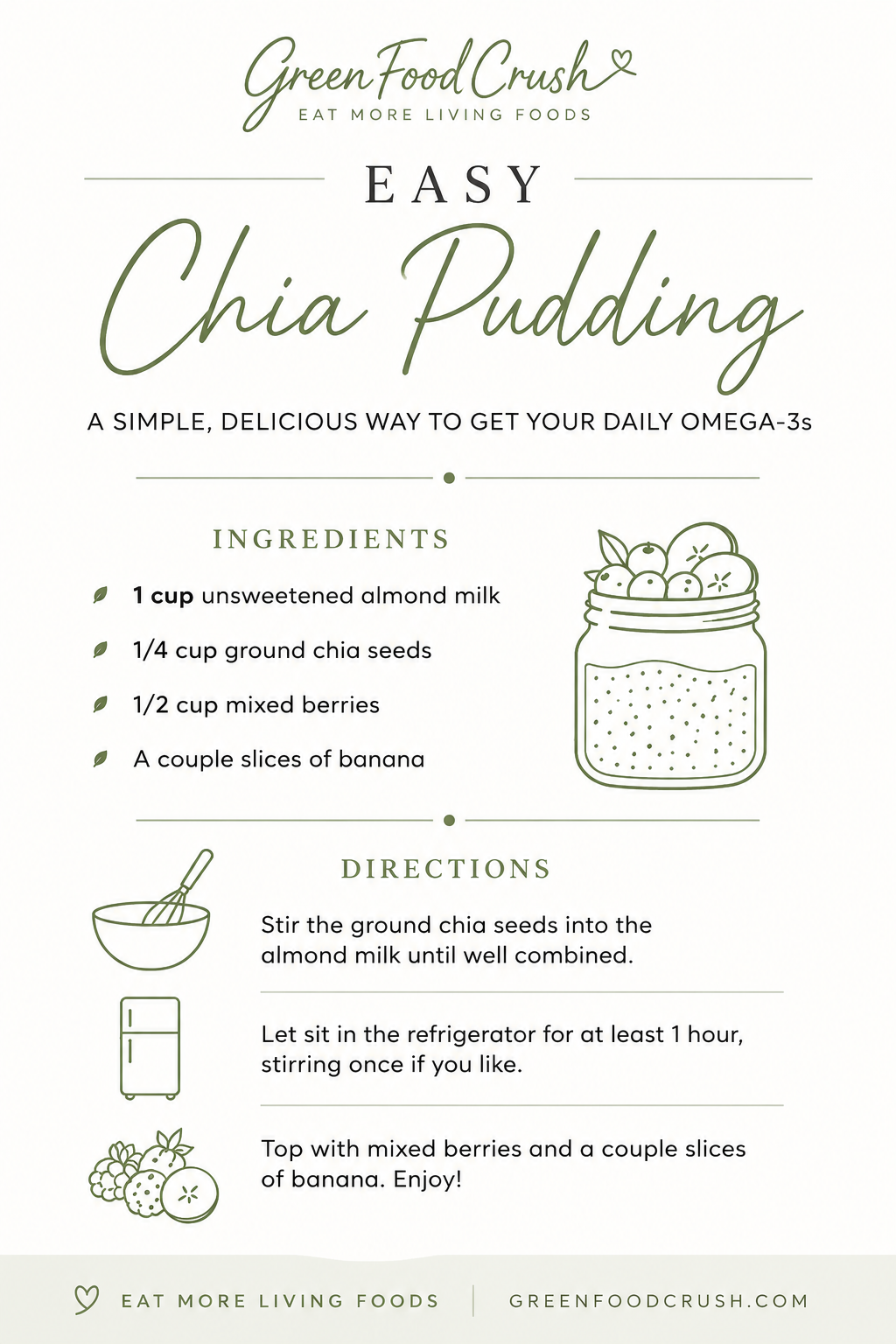
I don’t always put my flax or chia in a smoothie. Sometimes I turn it into dessert instead. The flax dessert pictured here is simply freshly ground flax mixed with mashed banana to make a soft crust, then topped with mixed berries, pomegranate seeds, and banana. The chia pudding below is another delicious option; see the recipe card under the photo.
This is another cornerstone of Dr. Goldner's protocol.
The published protocol calls for:
½ cup whole flax or chia seeds, ground fresh. I use a coffee grinder. Do not use flax meal or pre-ground flax; the omega-3s oxidize quickly, and you don’t get the full benefit.
OR
3 tablespoons cold-pressed flaxseed oil/chia oil
Flax and chia are rich sources of alpha-linolenic acid (ALA), an essential plant-based omega-3 fatty acid.
If you want to understand why Dr. Goldner emphasizes omega-3s so heavily—and the difference between ALA, EPA, and DHA—I go much deeper into that in my guide to [Why Does Dr. Brooke Goldner Recommend So Much Flax and Chia?].
I came to this protocol from the whole-food, plant-based, no-oil world, so I'll admit that using flax oil initially gave me pause! But Dr. Goldner uses cold-pressed flaxseed oil very intentionally as a concentrated source of omega-3 fats. She states that 3 tablespoons of oil equals ½ cup of seeds.
If you use flax oil, keep it refrigerated and follow Dr. Goldner's recommendations for the type and amount.
You can also split the difference. I often have ¼ cup of freshly ground flax or chia and use about 1½ tablespoons of cold-pressed flaxseed oil as dressing on my salad. Together, that gives me the equivalent of the protocol’s daily ½ cup seed/3 tablespoons oil target. And full disclosure: I don’t always measure my flax oil perfectly—sometimes my generous squeeze over a giant salad is a little more than 1½ tablespoons!
You don't have to put all your flax or chia in your smoothie, either. Chia thickens a smoothie considerably, and I prefer mine thinner and easy to drink, so I usually get my omega-3s elsewhere. I often put freshly ground flax over berries. It reminds me of a little berry cobbler and makes a very easy dessert after lunch. Although lately I’ve just been mashing a banana and adding the ground flax to that-simple and delicious!
3. Drink Your Water
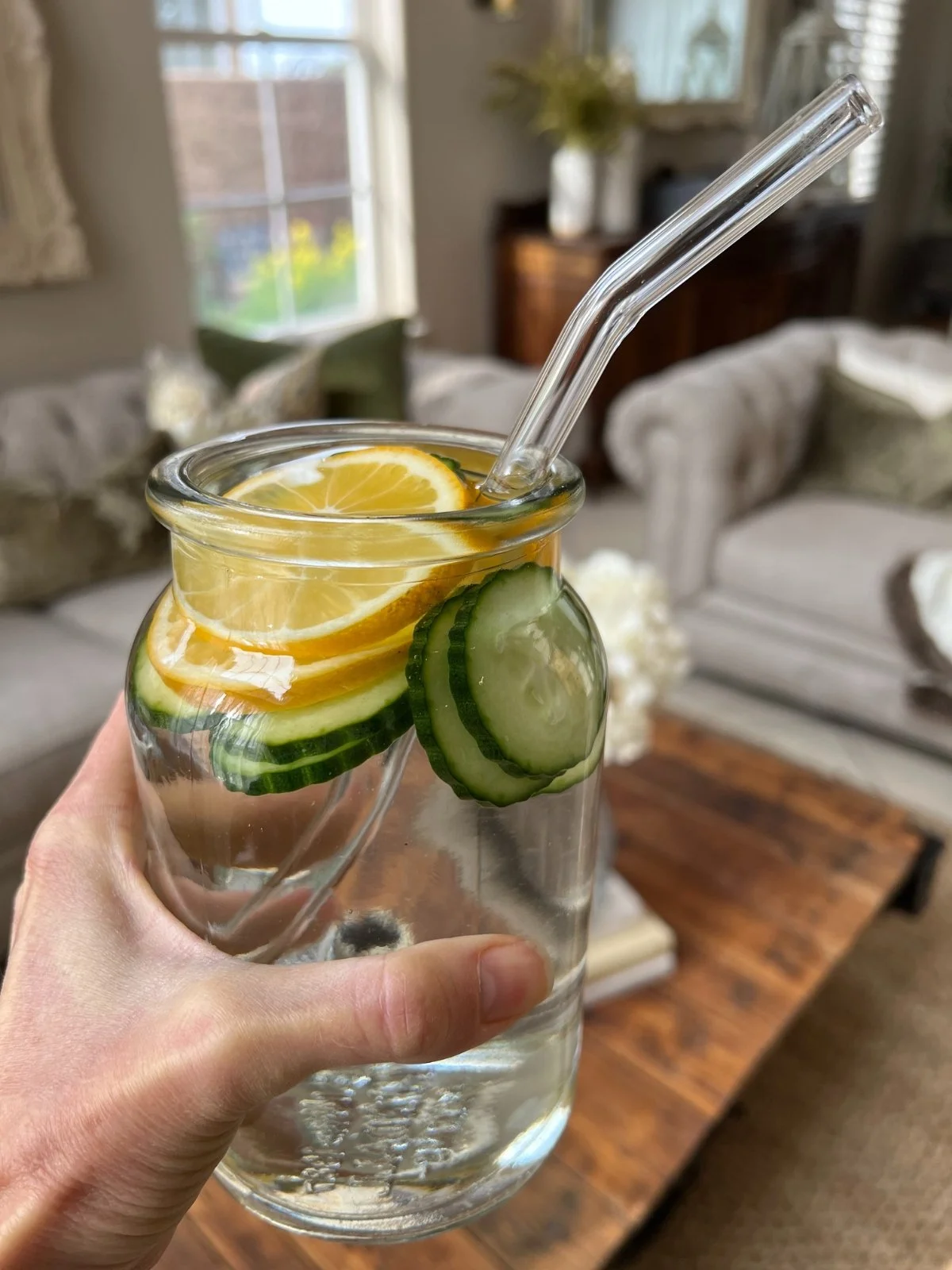
Then there's the water.
96–128 ounces a day is a lot of water when you aren't accustomed to it. And yes, one of the most common reactions I hear is:
"How am I supposed to drink THAT much? I'm already full!"
Dr. Goldner considers hydration an essential part of her recovery protocol. Water supports circulation, digestion, kidney function, temperature regulation, and the movement of nutrients and waste products throughout the body.
The good news is that the water in your smoothies counts.
What finally made this easier for me was getting a big head start in the morning. Every night, I bring a 32-ounce mason jar of water upstairs and leave it on my bathroom vanity. In the morning, I drink about 16 ounces right away, then sip the rest while I work out and get ready for the day. By the time I head downstairs, I already have 32 ounces behind me.
I find it much easier to spread my water throughout the day than to try to catch up in the afternoon or evening. I also try to be done drinking by 5 pm if possible so I don’t have to get up as much during the night.
If you have kidney disease, heart disease, a history of low sodium, or another condition that affects fluid balance, your appropriate fluid intake may be different. This is absolutely something to discuss with your physician.
One other thing I did is splurge on a new water bottle that I absolutely loved. It is a small investment that may get you excited about drinking more water. If you are going to be toting it everywhere, maybe get a leak-proof one or one that fits in your car cup holder.
4. Keep Fruit in Its Supporting Role
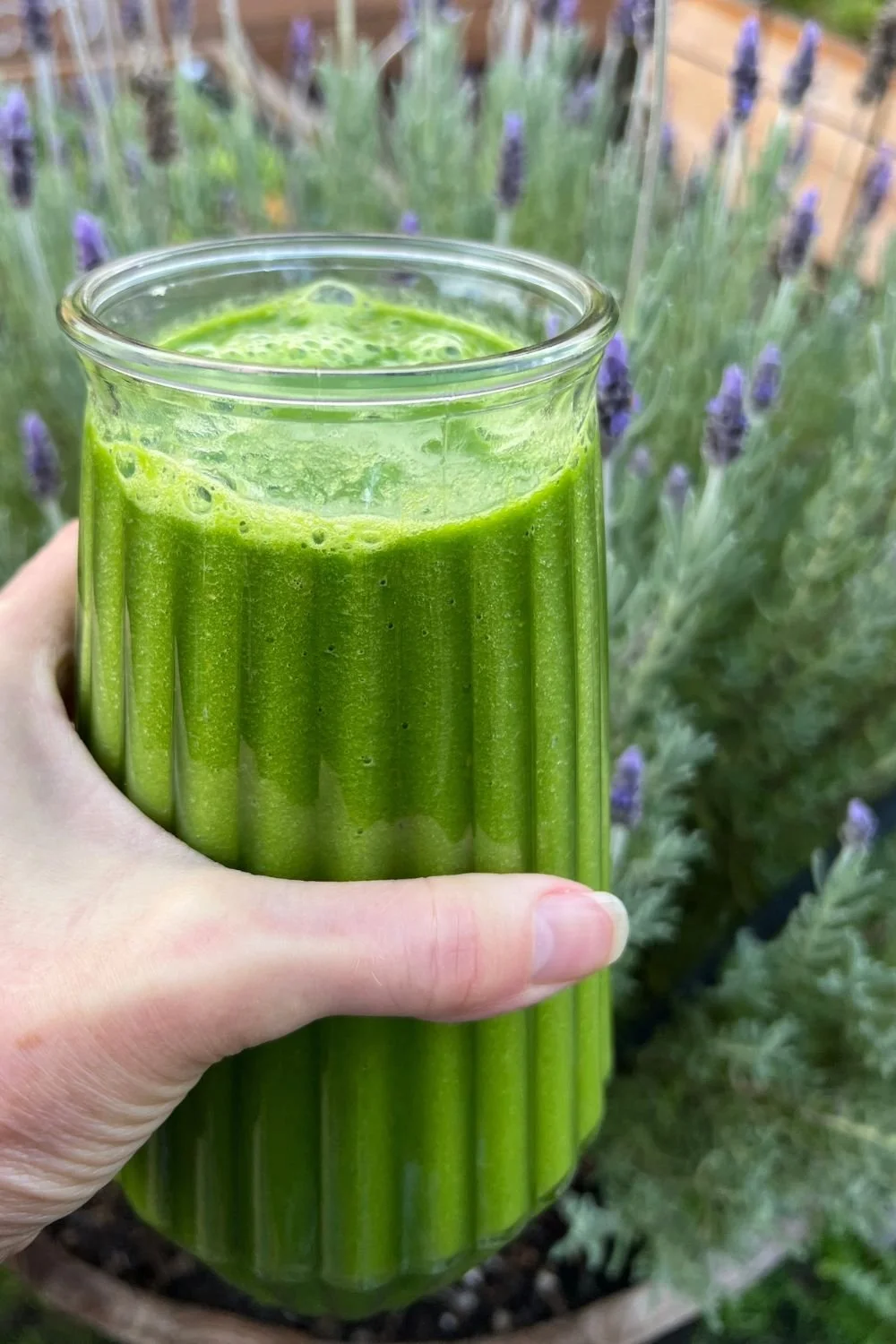
Fruit makes these enormous green smoothies much more enjoyable!
Fruit: Dr. Goldner’s published protocol recommends keeping fruit to no more than about 25% of total food intake so that vegetables remain the foundation of the diet. In her teaching and protocol communities, she has also discussed about 16 ounces of fruit per day alongside the 16-ounce minimum of greens and cruciferous vegetables. Because her written public instructions are less specific about exact daily fruit ounces, I personally think of the 25% guideline as the overarching rule: vegetables first, fruit in a supporting role.
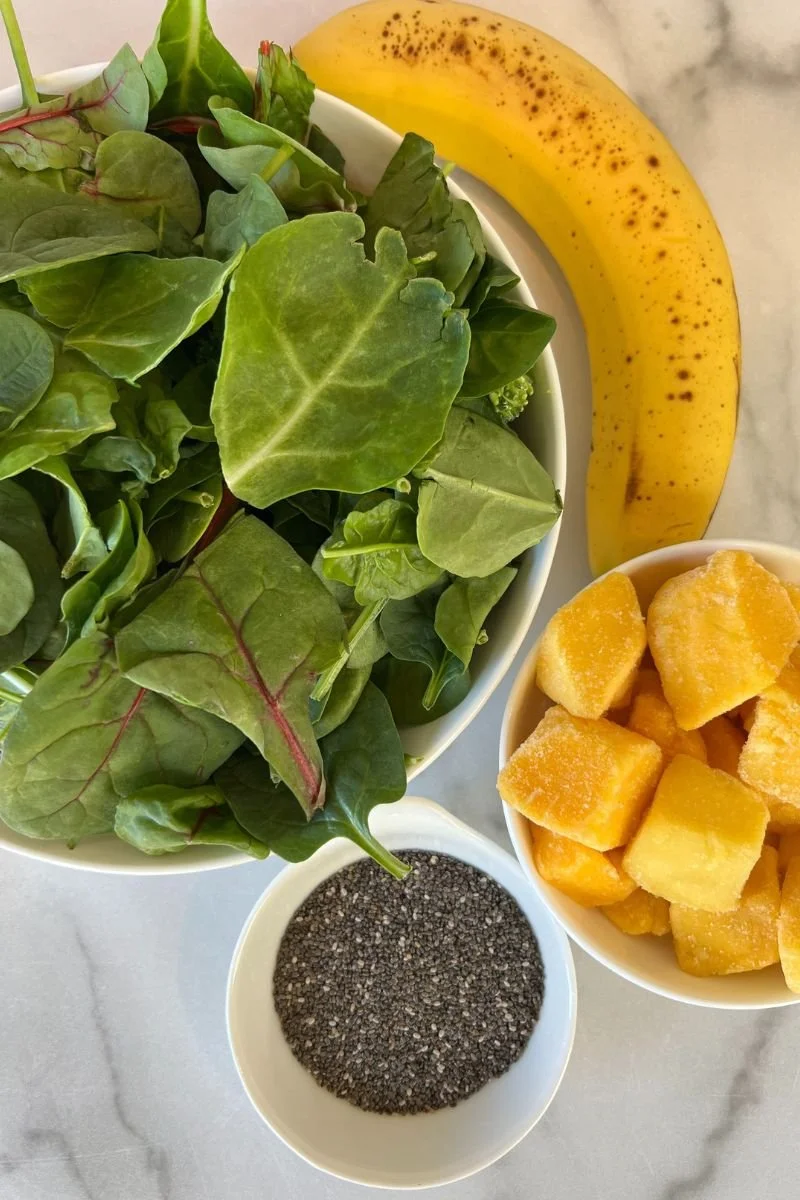
I love very ripe bananas and frozen mango because they make even a seriously green smoothie taste delicious.
If you're new to green smoothies, spinach + banana + mango is one of the mildest combinations I know.
A peeled lemon and a chunk of fresh ginger are also my favorites. The lemon makes everything taste incredibly fresh. I know lemon might sound strange, but trust me on this one!
For more combinations and beginner tips, see my How to Make Dr. Brooke Goldner’s Hyper-Nourishing Green Smoothie.
5. Build the Rest of Your Day Around Raw Plant Foods
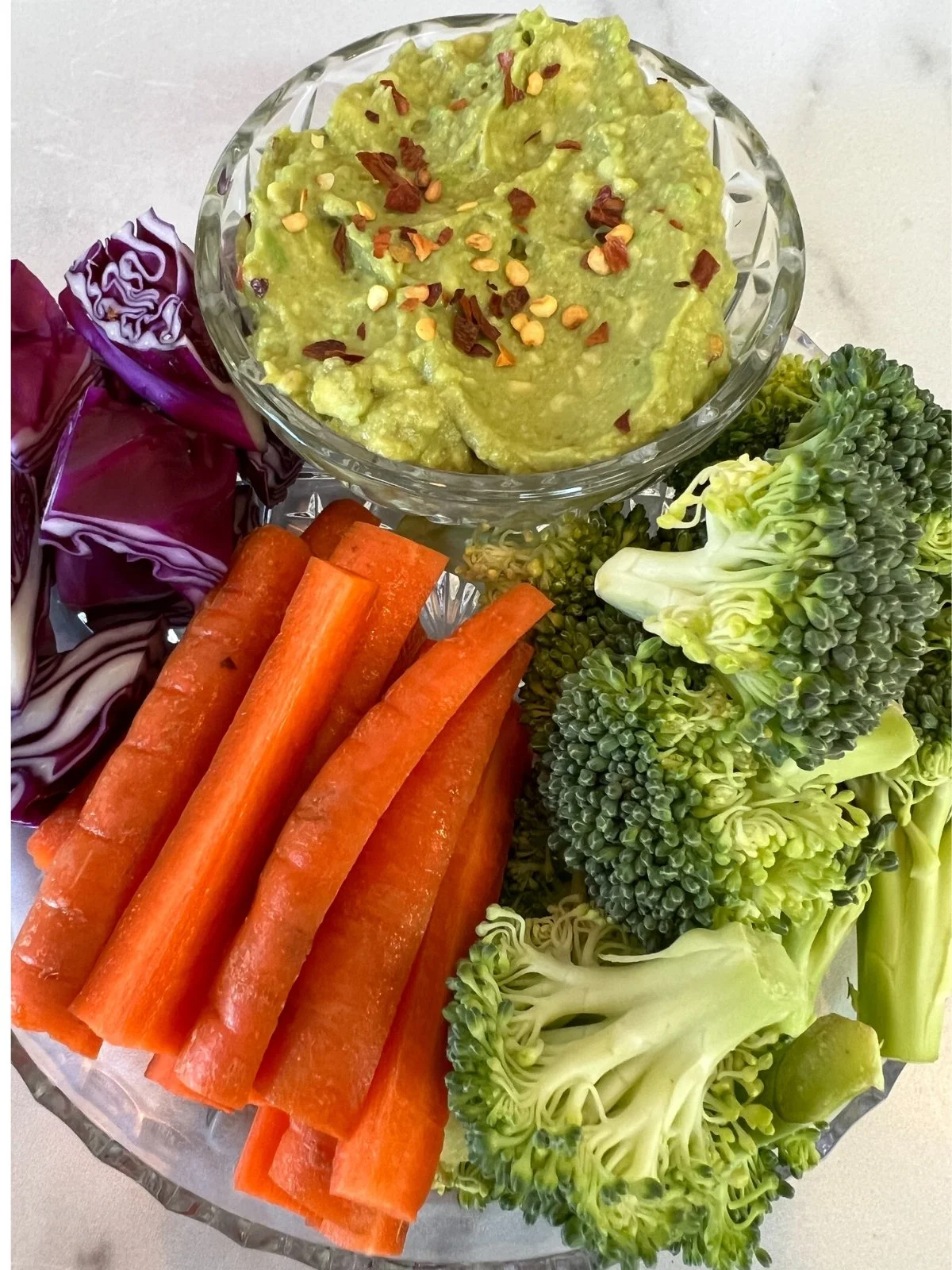
During the recovery phase, Dr. Goldner's protocol is raw and plant-based.
Once you've met the foundational requirements, raw vegetables can make up the rest of your meals. Avocado can add richness and make raw vegetables much more satisfying. And you can eat them in unlimited amounts as long as you have already met your minimums!
This is also where I stopped worrying about making the day look like breakfast, lunch, and dinner. Some days I drink most of my greens. Other days I want a huge salad or a plate of crunchy vegetables with guacamole. Once I understood what needed to go into the day, I found it much easier to arrange it in whatever way actually worked.
What I Eat in a Day on the Goodbye Autoimmune Protocol
This is the part I wanted when I first started: what does someone actually eat all day?
Breakfast: My Giant Green Smoothie
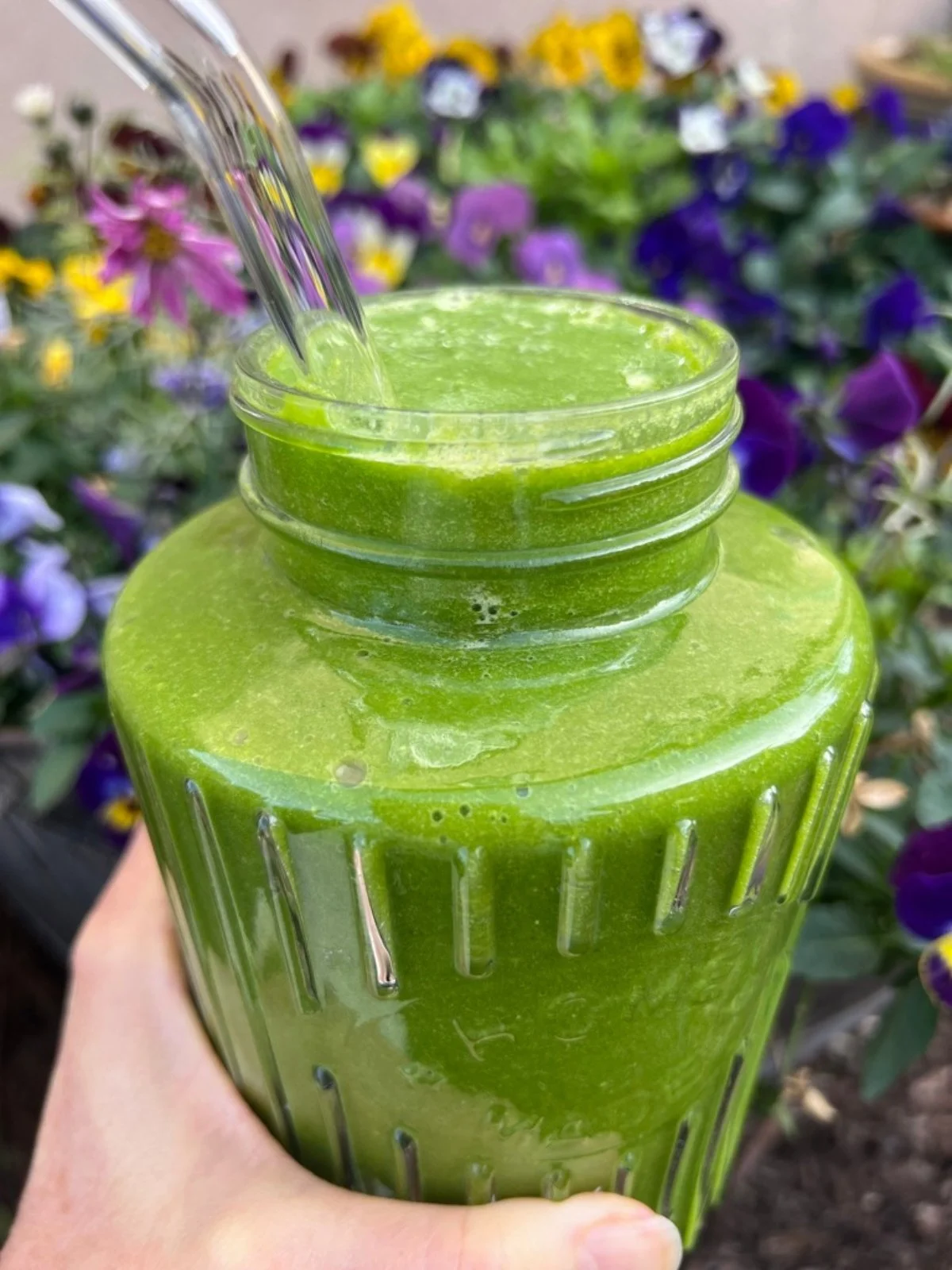
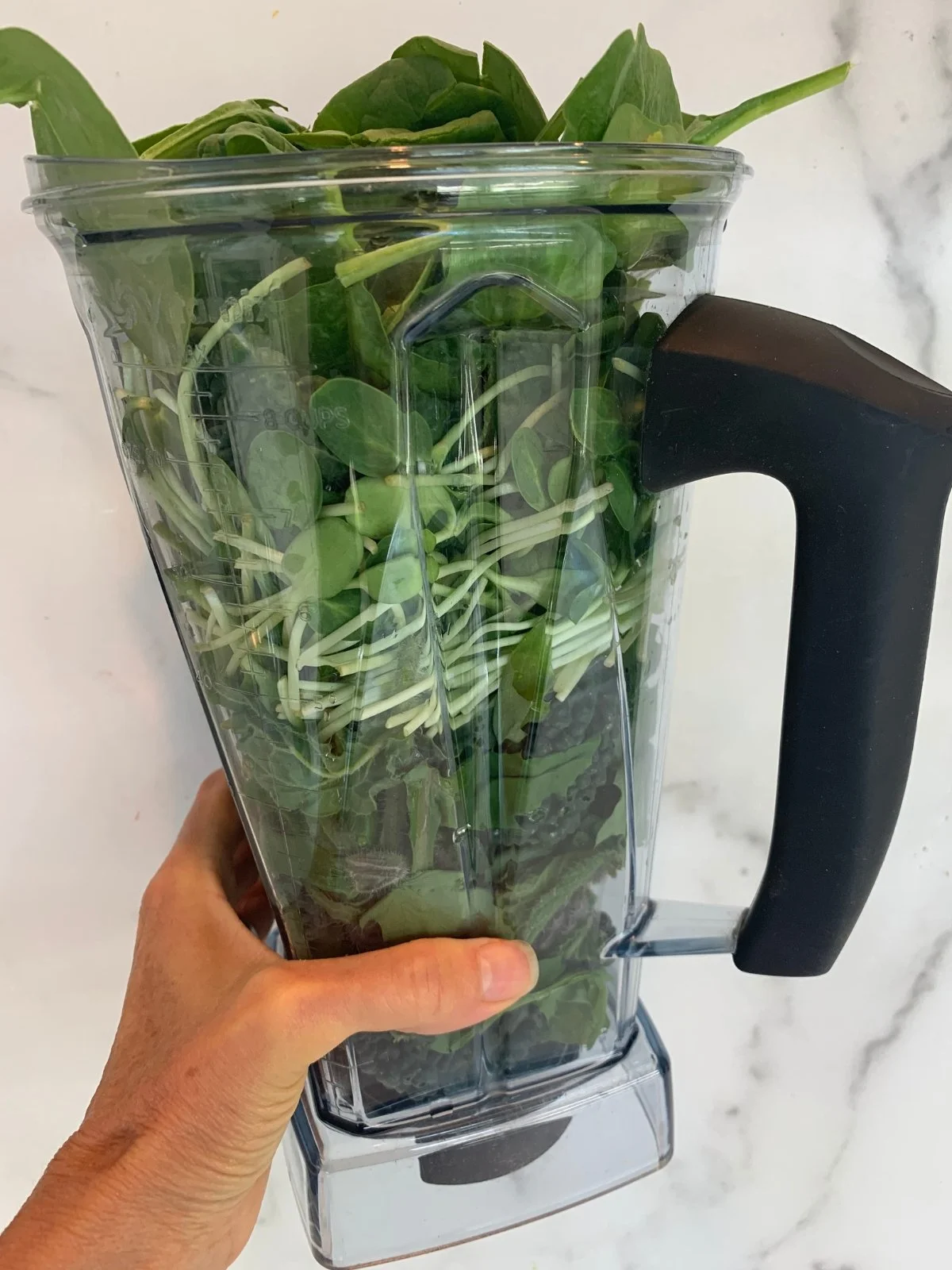
I typically make one large blender of smoothie containing my one-pound minimum of leafy greens and cruciferous vegetables.
I add about 32 ounces of water first, then briefly blend the greens to make room in the blender. Then I add fruit—usually ripe banana and frozen mango—plus lemon and ginger.
That makes two large smoothies.
On a workday, I drink one on my way to work and put the second in an insulated tumbler with a straw and a little ice for later.
Workdays were one of the first places I had to figure out the practical side. I share exactly how I handle meal prep, packed lunches, social situations, restaurants, and travel in my guide to [following the Goodbye Autoimmune Protocol in real life].
Obviously, yours doesn’t have to look like mine. This is just the routine that makes it easy for me to get everything in on a workday.
Lunch: A Huge Crunchy Salad
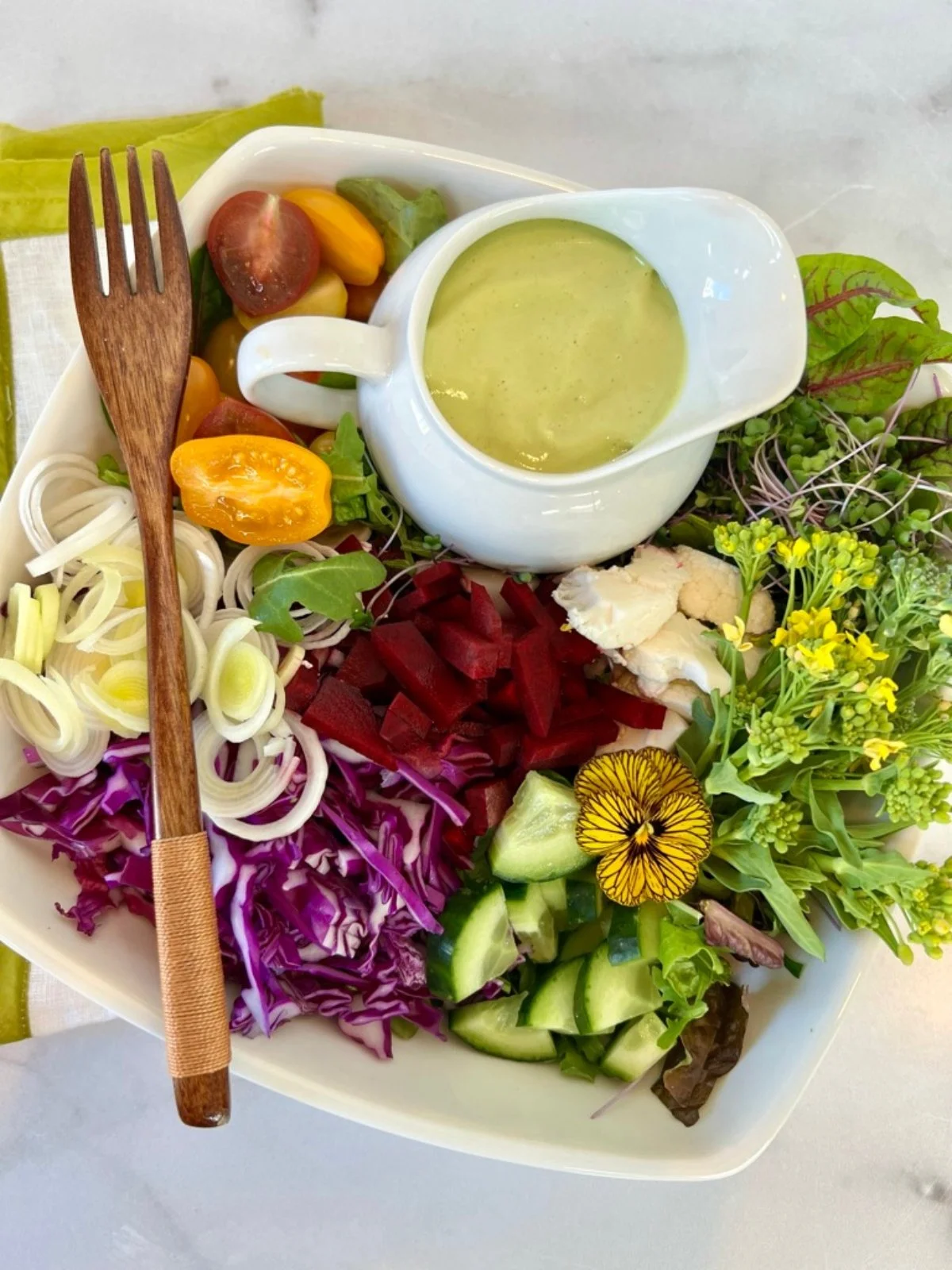
I have loved salads for as long as I can remember, so on the weekends, when I have more time, I make a beautiful work of art! The photo below shows what my salads look like during the week!
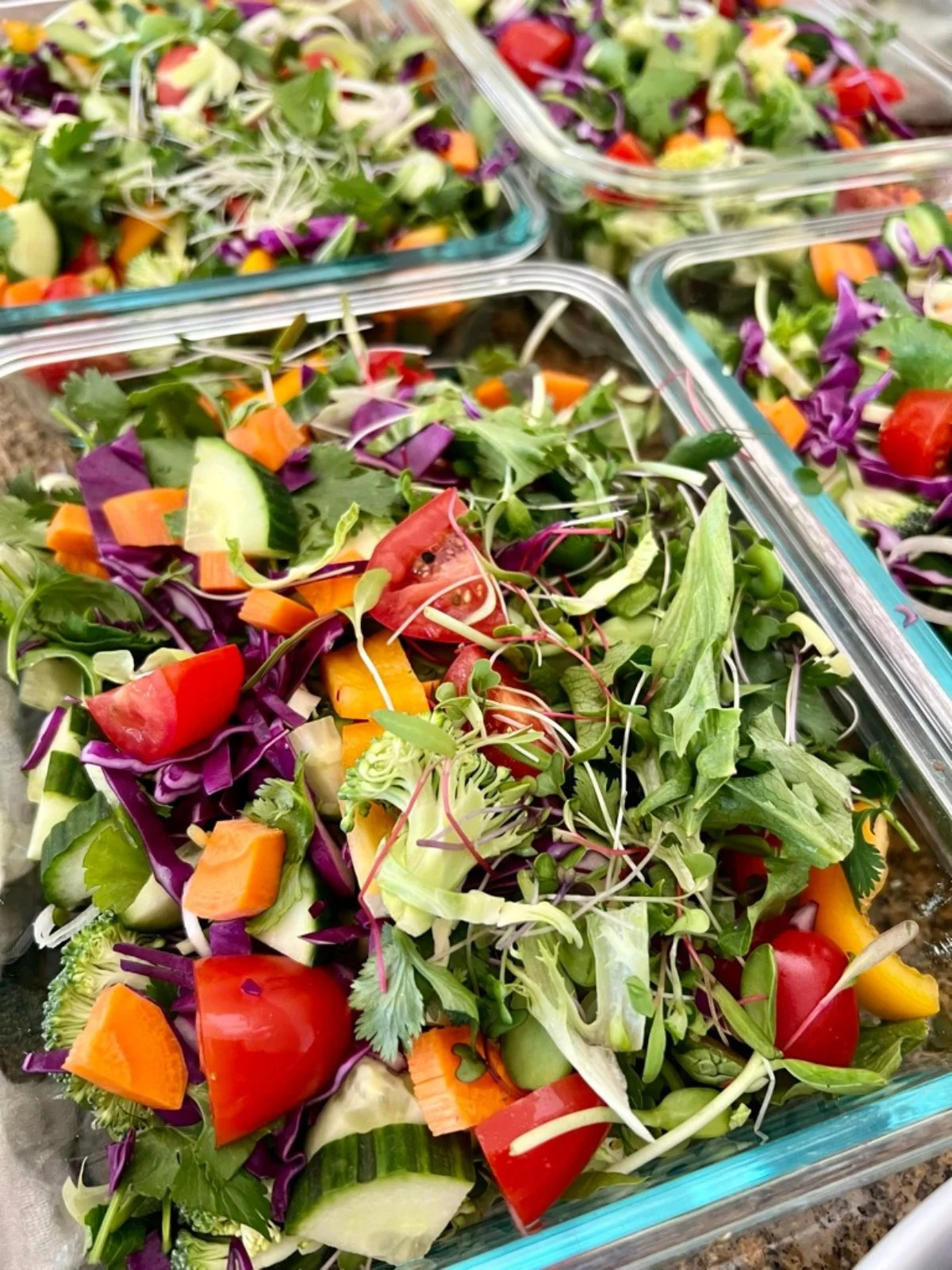
Lunch is usually another beautiful pile of vegetables.
Red cabbage is one of my favorites, along with carrots, cucumber, tomato, sprouts, broccoli, raw beets, and a little sauerkraut or thinly sliced green olives. My dressing is a very simple mix of flax oil and low-sugar balsamic, salt, and pepper. She recommends finding a balsamic that has less than 2 grams of sugar per serving.
I personally often eat more than the one-pound minimum of greens and crucifers because I enjoy them so much. When you’re first starting out, though, you may feel too full for that; do what works best for you.
I also enjoy small amounts of raw fermented vegetables. If you're curious about them, you can read what the science says about fermented foods or learn how to ferment vegetables at home.
And if giant salads make your heart happy too, my guide to building a beautiful nutrient-dense salad has lots of inspiration.
Dinner: Whatever Is Left
Sometimes dinner is my second smoothie. Sometimes I only have one smoothie, and dinner is another large salad or a plate of crunchy raw vegetables with guacamole. Sometimes I am done for the day and just enjoy an avocado.
That's one of the things I eventually realized: the protocol doesn't have to look like three conventional meals.
Eventually I stopped thinking so much about meals and just figured out a rhythm that worked for me.
Exactly What Foods Are Allowed?
THIS was one of my biggest questions when I started.
The core protocol is straightforward, but once you actually begin living it, suddenly you're wondering:
Can I have olives?
What about balsamic vinegar?
Fermented vegetables?
Almond milk?
Mustard?
Coffee?
Soy sauce?
And down the rabbit hole you go.
Broadly, the recovery phase centers on raw vegetables, leafy greens and crucifers, limited fruit, avocado, flax/chia or flax oil, and certain protocol-compliant herbs, spices, and condiments.
Foods that aren't part of the active recovery phase include animal foods, grains, beans and lentils, tofu, nuts, dried fruit, cooked foods, protein powders, artificial sweeteners, and other foods outside the recovery protocol.
Want a Simple Goodbye Autoimmune Protocol Shopping Guide?
When I first learned about Dr. Goldner’s protocol, figuring out exactly what to buy — and what actually fit the fully raw protocol — took more digging than I expected.
Over time, I kept notes from her videos, Q&As, books, and community discussions and turned them into a practical Green Food Crush GAIP Shopping Guide.
Inside, you’ll find foods to build your cart around, simple ways to make raw meals delicious, foods to leave out during the fully raw protocol, omega-3 options, hydration reminders, and a screenshot-friendly grocery checklist you can take to the store.
Save it to your phone, print it for your kitchen, or pull it up while you wander the produce aisle.
This is an independent Green Food Crush reference guide based on my research and personal experience following Dr. Goldner’s teachings. It is not an official Goodbye Lupus publication
The Questions Everyone Asks
After spending a lot of time in Dr. Goldner's community, I've noticed that the same questions come up again and again. They're good questions—and many were questions I had too.
Will I Get Enough Protein?
This may be the number-one question.
It comes up so often that I wrote a separate article on protein in Dr. Goldner’s protocol—how much we actually need, where it comes from in plant foods, and what her approach looks like in practice. You can read my [complete guide to protein on the Goodbye Autoimmune Protocol] here.
Dr. Goldner teaches that when people eat sufficient quantities of the foods in her recovery protocol, she rarely sees protein deficiency.
Plants contain amino acids, including leafy greens and cruciferous vegetables, and chia and flax contribute protein as well. More broadly, appropriately planned vegan diets can meet adult nutritional requirements.
After recovery, Dr. Goldner's maintenance phase allows additional whole plant foods, including legumes and whole grains, which provide more concentrated sources of plant protein.
If your protein needs are unusually high or you have a medical condition that changes your nutritional needs, this is one of those times when individualized guidance is worth getting. Dr. Goldner also offers appointments for people who want help applying her protocol to their own situation.
Won't All That Chia, Flax and Avocado Make Me Gain Weight?
Another HUGE question.
People see ½ cup of seeds, flax oil, and avocado and understandably think, Wait a minute. Isn't that a lot of fat?
Dr. Goldner deliberately includes these foods during recovery, and she has repeatedly said she sees people improve body composition rather than automatically gaining excess weight when following the complete protocol.
The context matters. She isn’t adding flax, chia, and avocado on top of a typical processed diet. They’re part of a very specific raw plant-food protocol where many other calorie-dense foods aren’t being eaten.
Individual weight responses can vary, but eating fat does not automatically translate into gaining body fat.
But I Thought Oil Was Bad. Why Is Flax Oil Allowed?
I wondered exactly the same thing.
Many whole-food, plant-based approaches eliminate added oils entirely. Dr. Goldner's recovery protocol is different.
She specifically uses cold-pressed flaxseed oil as an optional concentrated source of ALA omega-3, with 3 tablespoons used in place of the ½ cup of flax or chia, if that works better for you.
That helped me understand the distinction. She uses flax oil for a very specific reason in this protocol; she isn’t saying that all added oils suddenly become health foods.
What About Oxalates? Won't All Those Greens Cause Kidney Stones?
This question comes up constantly.
Oxalates are naturally present in many plant foods, and some greens—particularly spinach and Swiss chard—are quite high in oxalate. If you've previously formed calcium-oxalate kidney stones or have another reason to restrict oxalate, that matters.
But kidney stones have multiple causes and risk factors. Low fluid intake is important, and high sodium and high animal-protein intake can also increase stone risk. So a high vegetable intake by itself doesn’t tell us whether someone will develop kidney stones.
This is also one reason variety helps: kale, broccoli, and cabbage, for example, differ nutritionally from spinach.
If you've had kidney stones, know you have hyperoxaluria, or have kidney disease, work with your physician or a renal dietitian rather than guessing about your individual needs.
Why So Much Water? I'm So Full!
I hear you!
The volume can feel like a lot at first.
Remember that the water used to make your smoothies counts toward your daily total. Spreading your intake across the day can also make it much easier than trying to drink huge amounts at once.
The biggest thing that helped me was starting early. I keep a 32-ounce mason jar upstairs at night so I can begin drinking before I even come downstairs in the morning.
Dr. Goldner's published recovery protocol uses 96–128 ounces daily, but fluid needs may change for certain medical conditions, so follow your physician's advice if you've been given a different fluid target.
Do I Have to Drink Green Smoothies?
No.
Smoothies are simply an extraordinarily convenient way to get a large quantity of greens and cruciferous vegetables into your day.
If you'd rather eat giant salads, chopped vegetables, or vegetables with guacamole, you can.
For me, smoothies make the protocol much easier.
Do I Have to Buy Organic Produce?
Dr. Goldner has shared that when she recovered, she was a financially strapped medical resident and couldn't afford to buy everything organic.
If buying everything organic isn’t realistic for you, I wouldn’t let that stop you from buying the vegetables.
Use what is accessible to you.
I also recommend looking at the Clean 15 and Dirty Dozen lists online. It’s a helpful guide to the most heavily sprayed produce and the produce that's less sprayed. It may help you make better-informed decisions about where it's best to choose organic.
Can I Eat Cooked Food After I Heal?
Yes—this is where Dr. Goldner's maintenance or step-down phase comes in.
Her published maintenance protocol allows cooked whole-plant foods to return gradually, along with foods such as legumes, whole grains, nuts, and seeds. Her published approach introduces changes one at a time so that symptoms can be monitored.
This is another important reason not to confuse the intensive recovery protocol with the way someone necessarily eats forever.
What Does the Research Actually Show?
Dr. Goldner’s work has also begun appearing in the peer-reviewed literature.
A 2019 case series described two people with lupus nephritis who experienced substantial improvements while following her raw, whole-food, plant-based nutrition protocol.
In 2024, Dr. Goldner and Kara Livingston Staffier published a peer-reviewed case series in Frontiers in Nutrition describing three women with systemic lupus erythematosus and Sjögren’s syndrome who followed her recovery protocol. The women reported dramatic symptom improvements, with nearly all reported symptoms resolving within four weeks or less, and the paper describes longer-term remission in these cases.
I find that research exciting, and I hope we continue to see more studies on this approach.
Beyond the published research, Dr. Goldner has also shared the stories of many people who have worked with her and experienced remarkable changes in their health. Those testimonials were one of the things that made me want to learn more when I first discovered her work.
Don't Forget the Rest of Your Life
Dr. Goldner's approach isn't only about what's in your blender.
Sleep, stress management, movement, and other lifestyle factors matter too.
When I’m doing one of these more focused periods, I notice that I naturally start paying more attention to the rest of my life too—sleep, movement, getting outside, stress, all of it.
Food is a big piece of this protocol, but it isn’t the only thing Dr. Goldner talks about. The way we sleep, move, manage stress, and live day to day is part of the picture too.
And Now for the Fun Part: The Costco Cart
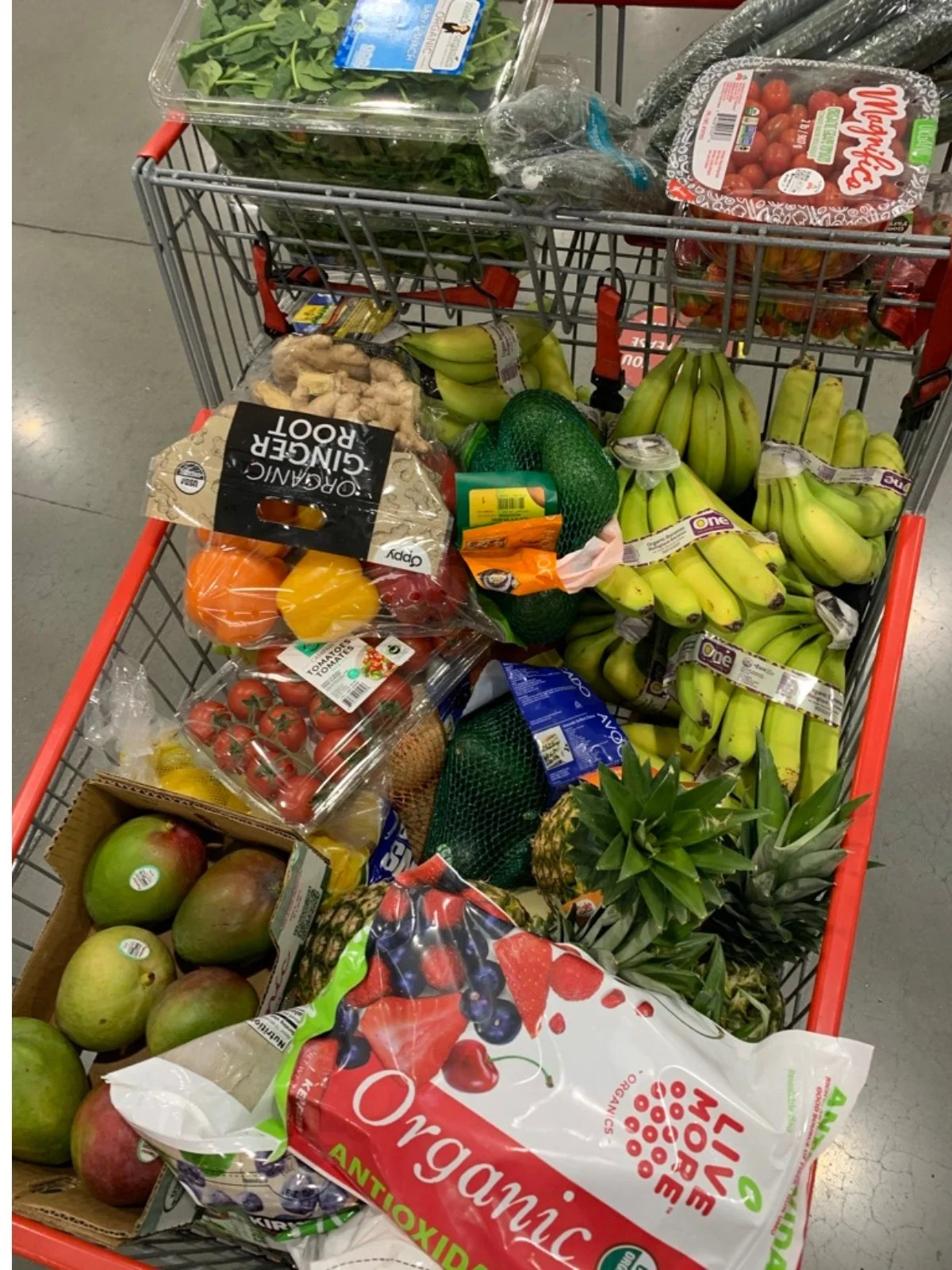
I don't particularly love shopping.
I do, however, love shopping for healthy food.
Because we eat so much produce and frozen fruit, Costco has been one of our favorite places to stock up. And when you're following this protocol, your cart gets...noticed.
On one particular trip, we passed a guy in the produce section who looked at our cart and said:
"You guys must be having a monkey party!"
A woman walked past and said, "Wow, that IS a lot of bananas."
Then we ran into the first guy again in another aisle.
"You guys must be smoothie freaks or something."
We laughed and said, "Yep!"
A couple of aisles later, another man came around the corner talking on his phone. He glanced at our cart and, apparently inspired by what he saw, said into the phone:
"Oh yeah, do we need bananas?"
At this point, we were cracking up.
Finally, at checkout, the woman behind us said, "I have never seen such a beautiful cart! Are you hosting a gathering?"
Nope, This is just for us!
I told her this was simply how we ate. She started asking questions, told me she'd been trying to eat healthier, and suddenly our ridiculous mountain of bananas had started a lovely conversation between strangers.
Apparently, a cart with that many bananas is impossible to ignore.
Banana tip: Buy several bunches at once, let them get wonderfully ripe and spotty, peel them, and freeze them. Then there's always a sweet frozen banana waiting for a smoothie.
Where to Learn More From Dr. Brooke Goldner
I strongly encourage you to learn the protocol from Dr. Goldner herself in addition to reading about my experience.
Her books are wonderful places to go deeper. You'll find Goodbye Lupus,Goodbye Autoimmune Disease, and her newer recipe book Goodbye Lupus, Hello Delicious through Dr. Goldner's official book and product page. You can also book an appointment with her through that last link. Or buy the books in the Amazon links above. (Not affiliated, just helpful links.)
One resource I especially appreciate is Wellness Wednesday. Dr. Goldner goes live on YouTube every Wednesday at 12:30 p.m. Pacific and spends about an hour teaching and answering questions from the public—for free. It's an incredibly generous resource, particularly when you're new and suddenly have seventeen questions about what goes in your smoothie. You can watch her Wellness Wednesday livestreams on YouTube.
I also recommend the free Smoothie Shred community. It is a great place to connect with people going through her various protocols and share questions and answers from their personal experiences. Sometimes Dr. Goldner even joins in and answers health and protocol questions. I’ve found it really helpful to see what other people are actually doing and what questions come up for them.
And, of course, her main resource is. GoodbyeLupus.com.
My Experience Today
I have now been symptom-free for more than eight years, and I feel healthier and stronger than I did years ago.
I still come back to this protocol from time to time because I genuinely enjoy how I feel when I’m eating this way. And every time I do it, I’m reminded how much I like having a few simple things to focus on: a ridiculous amount of greens, plenty of omega-3s, lots of water, good sleep, and taking care of myself well.
I don’t think food gives us complete control over our health. It doesn’t. But I do think our everyday choices matter, and learning that changed the way I live.
If you found this article because something about your health has gotten your attention, I hope seeing exactly how I do the protocol makes it feel a little less complicated. And if you’re simply curious about Dr. Goldner’s approach, I hope this gives you a useful place to start.
Keep Exploring
New to plant-based health and wondering where to begin? Start with my simple guide to caring for your health.
Want to begin with Dr. Goldner's gentler, additive approach rather than the full recovery protocol? Read Dr. Brooke Goldner's Hyper-Nourishing Protocol: A Beginner's Guide.
Ready to put all those greens into something delicious? Here's my beginner's guide to green smoothies.
And if fermented vegetables are calling your name, explore the health benefits of fermented foodsand my step-by-step guide to making fermented vegetables at home.
I hope you find something here that helps you take good care of yourself and enjoy a long, healthy life.